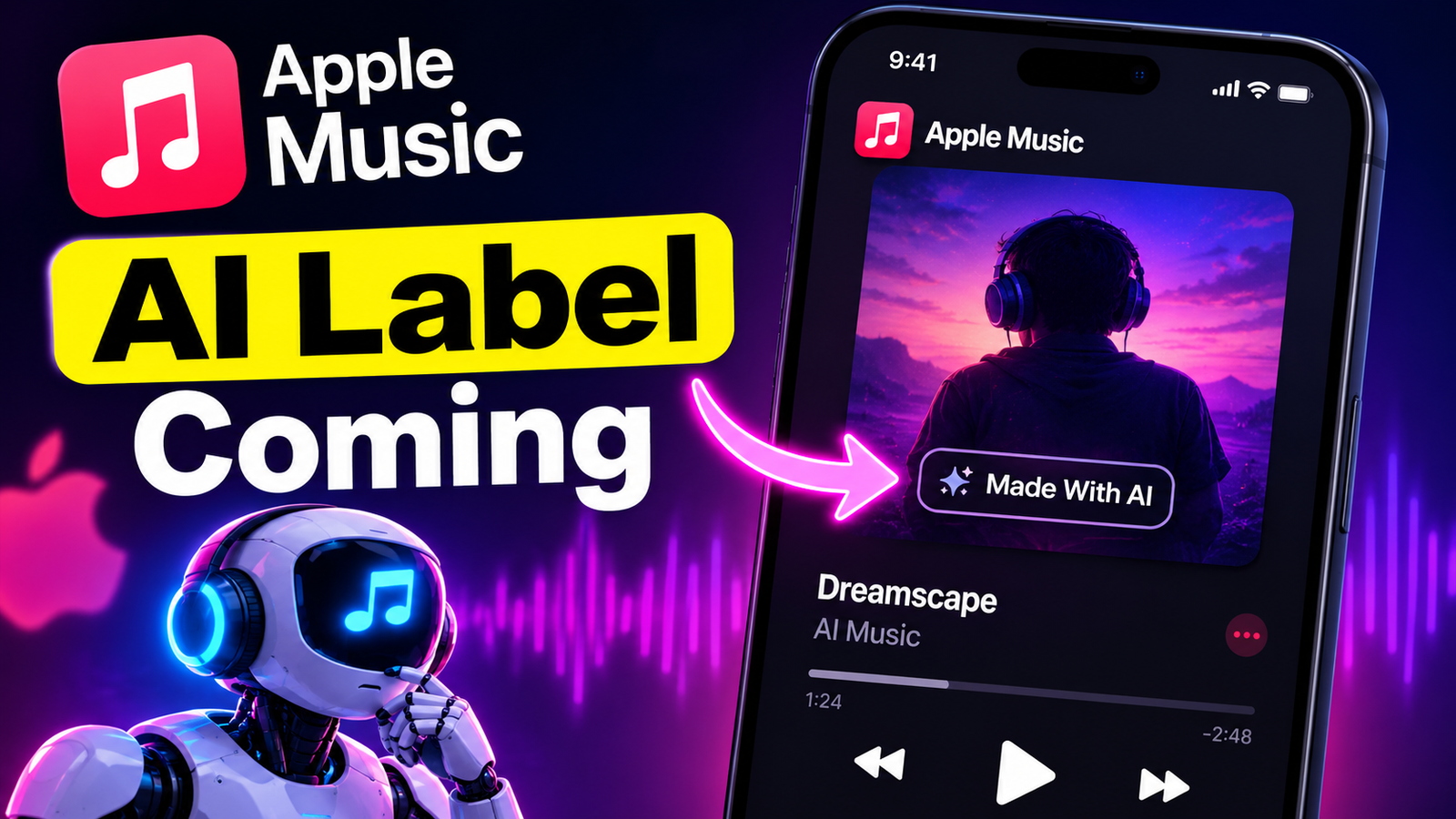
Artificial intelligence is changing the way music is created, and streaming platforms are now looking for better ways to tell listeners when AI has played a major role in producing a song. Apple Music is reportedly preparing a new “Made With AI” label that could make AI-generated tracks easier to identify.
The planned system is part of Apple’s wider push toward greater transparency on its music platform. Instead of preventing AI-created songs from being uploaded, Apple appears to be focusing on giving listeners more information about how the music was produced.
Here’s everything you need to know about Apple Music’s planned AI labeling system, how it could work, and what it may mean for artists and listeners.
Apple Music Is Moving Toward Mandatory AI Disclosure
Apple previously introduced Transparency Tags, which allowed artists and other music creators to disclose whether artificial intelligence was involved in different parts of the production process.
These disclosures could cover areas such as:
- AI-generated or AI-assisted artwork
- AI involvement in recorded music
- AI-assisted lyrics or songwriting
- AI-generated music videos
The next step could make these disclosures mandatory instead of optional.
Under the planned approach, artists, record labels, and distributors would be expected to provide accurate information about AI use when submitting music to Apple Music.
If a song is largely created using artificial intelligence, it could receive a visible “Made With AI” label. This would allow users to understand that AI played a significant role in producing the track.
Apple has not publicly confirmed an exact launch date for the feature, so its availability and final implementation could still change.
AI-Generated Music Is Becoming More Common
The growing popularity of AI music tools has made it possible to create songs much faster than before. Anyone with access to the appropriate tools can potentially generate vocals, instruments, melodies, lyrics, or even complete tracks.
Apple Music is reportedly seeing a significant amount of AI-generated content among new uploads. According to comments attributed to Apple Music executive Oliver Schusser, more than one-third of newly uploaded songs each month are created entirely with AI.
However, the amount of AI-generated music being uploaded does not necessarily translate into the same level of listener interest.
AI-generated tracks reportedly represent less than 0.5% of total listening time on the platform. This indicates that although AI music production is growing quickly, human-created music continues to account for the overwhelming majority of listening activity.
How Apple Could Detect AI-Generated Songs
Simply asking creators to disclose AI usage may not be enough. Some AI-generated songs could potentially be uploaded without accurate information about how they were produced.
To address this challenge, Apple has reportedly developed technology capable of analyzing music files for signs of AI involvement.
The technology is intended to help determine things such as:
- Whether artificial intelligence was involved in creating a track
- How significantly AI contributed to the final recording
- Which AI models may have been used
This type of detection could become increasingly important as AI-generated music becomes more difficult to distinguish from traditionally produced recordings.
However, automated detection may not completely replace creator disclosures. Apple may still depend on artists, labels, and distributors to provide accurate information when music is submitted.
Why AI Labels Could Matter
The introduction of a “Made With AI” label could give listeners more context before they listen to a song.
For example, two tracks might sound similar, but one could have been recorded primarily by human musicians while the other was generated almost entirely using AI tools. A clear label would allow listeners to know the difference.
This could be particularly important for people who prefer music created primarily by human artists or who simply want to understand the technology behind the content they consume.
At the same time, labeling AI-generated music instead of automatically removing it gives creators an opportunity to experiment with new technology while maintaining transparency.
How Other Music Platforms Are Responding
Apple isn’t the only major music company dealing with the rapid growth of AI-generated content. Other platforms have also started developing policies around AI music.
Spotify
Spotify has reportedly been working to identify suspicious AI-generated artist profiles and can take such profiles into account when managing recommendations.
The focus is partly on preventing artificial activity from affecting recommendation systems and the listening experience.
Tidal
Tidal has taken a different approach by identifying AI-generated music and restricting its ability to generate royalty payments under its stated policies.
Beatport
Beatport has adopted a stricter position toward fully AI-generated music. The platform has moved to prohibit certain fully AI-generated tracks and uses detection technology as part of its enforcement efforts.
These different approaches show that the music industry has not yet adopted one universal policy for dealing with AI-generated songs.
AI-Assisted Music Is Different From Fully AI-Generated Music
One important issue is that not every song involving AI is completely generated by artificial intelligence.
An artist might use AI to:
- Generate an initial musical idea
- Improve a recording
- Experiment with lyrics
- Create background elements
- Produce artwork
- Edit or enhance vocals
In such cases, the artist may still have played a major creative role in producing the final work.
This is why transparent labeling systems may need to distinguish between AI-assisted music and music that is primarily or entirely generated by AI.
The distinction could become increasingly important as AI becomes a normal part of music-production software.
What Apple Music Users Can Expect
If Apple introduces the planned labeling system, listeners may see AI-related information alongside or within the presentation of certain songs.
The label is expected to provide additional context rather than automatically preventing users from listening to AI-generated music.
This means a song marked “Made With AI” could still remain available for streaming. The main change would be that listeners have more information about the production process.
For artists and distributors, however, the system could create an additional responsibility: accurately reporting AI usage when submitting music.
What This Means for Musicians
AI tools can reduce the technical barriers involved in music production, allowing more people to experiment with songwriting and audio creation.
At the same time, the rapid increase in AI-generated music has created concerns surrounding creativity, copyright, artist rights, royalties, and transparency.
Mandatory disclosure could help platforms distinguish different types of content while giving artists clearer expectations about how AI-assisted work should be identified.
It may also encourage creators to be more transparent about the technology used during production.
The Future of AI Music on Streaming Platforms
The music industry is still working out how AI-generated content should be handled. Different platforms are experimenting with labeling, detection systems, recommendation restrictions, and royalty policies.
Apple’s reported “Made With AI” approach suggests that transparency could become an important part of the future streaming experience.
As AI tools continue to improve, it may become increasingly difficult for listeners to determine how a song was created simply by hearing it. Labels could therefore provide useful information without necessarily deciding whether a particular song is good or bad.
Final Thoughts
Apple Music’s planned “Made With AI” labels could represent an important step toward greater transparency in the rapidly changing music industry. Rather than simply treating AI-generated music as something that should be removed, the approach focuses on informing listeners about how a track was produced.
The reported increase in AI-generated uploads shows why platforms may need better systems for identifying and labeling this type of content. At the same time, the relatively small share of total listening attributed to AI-generated music suggests that human-created music remains dominant for now.
As Apple and other streaming services develop their policies, clear distinctions between fully AI-generated and AI-assisted music will likely become increasingly important. For listeners, accurate labels could make it easier to understand the music they are hearing and make informed choices about the content they want to support.