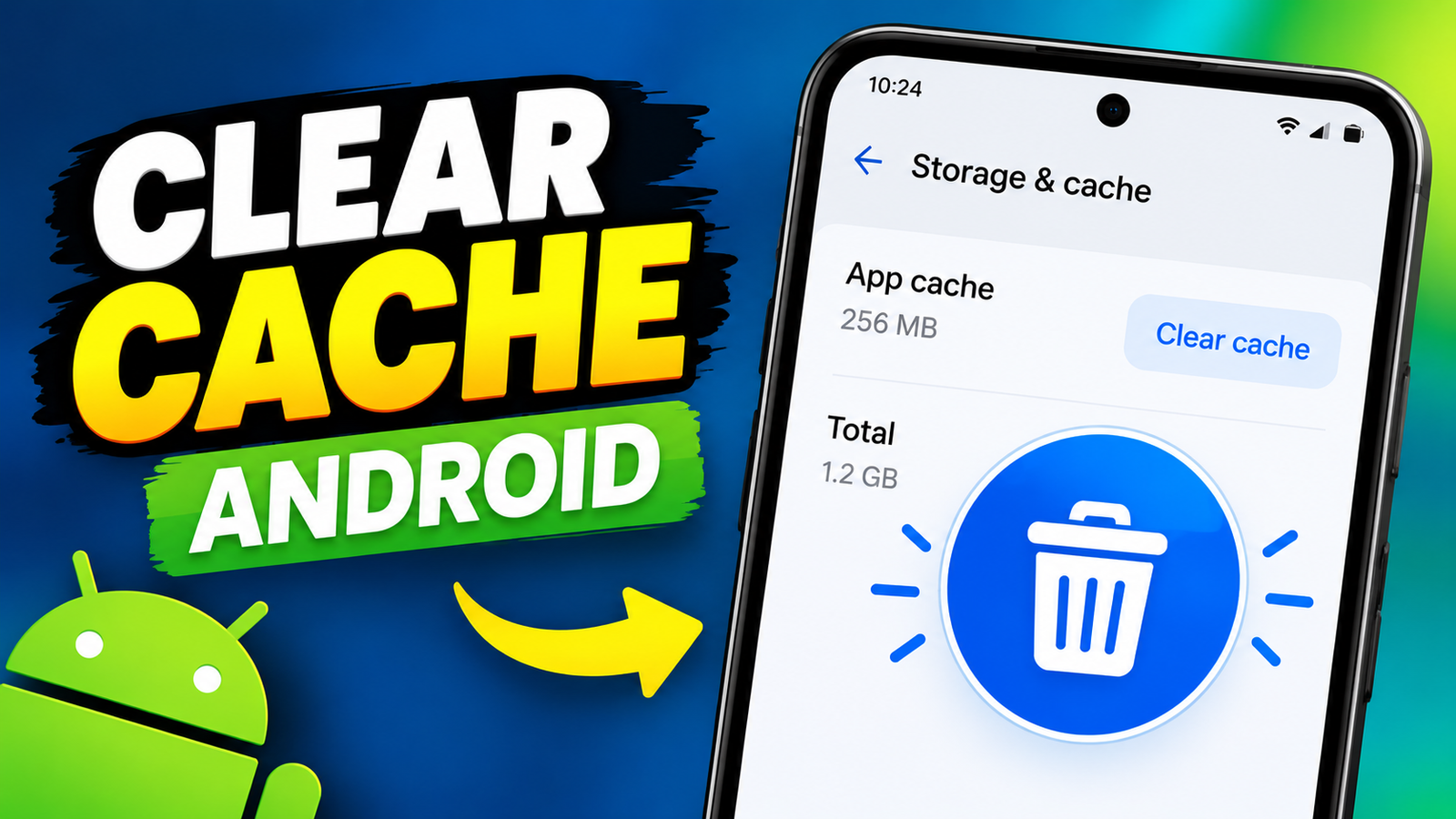
If your Android phone has started feeling slower, apps are crashing more often, or your available storage is getting low, clearing cached files can sometimes help. Android apps regularly create temporary files to speed up loading and improve everyday performance. However, these files can accumulate over time.
The good news is that clearing an app’s cache is generally safe and does not normally remove your personal photos, videos, contacts, or documents. You can also clear cached website files from your browser when needed.
In this guide, we’ll explain what Android cache is, how to remove it from individual apps and browsers, and the difference between Clear Cache and Clear Data.
Also read: How to Clear Cache on Android: A Beginner-Friendly Guide
What Does Cache Mean on Android?
Cache refers to temporary information stored by apps, browsers, and parts of the operating system. For example, an app may save frequently used images or other temporary resources so it doesn’t have to download or process them every time you open the app.
This can make an app feel faster during normal use. However, cached files aren’t essential to your personal data. When you clear them, the app can create new cache files again as you continue using it.
Cache can come from many places, including:
- Social media applications
- Streaming apps
- Web browsers
- Shopping apps
- Games
- Other frequently used applications
The amount of cached data can vary significantly from one app to another.
When Should You Clear Android Cache?
There is usually no need to clear cache every day. Android is designed to manage temporary files automatically, and clearing cache too frequently may simply cause apps to recreate those files.
You might consider clearing an app’s cache when:
- The app is behaving strangely.
- An application frequently freezes or crashes.
- An app is displaying outdated temporary content.
- A particular app is consuming an unusually large amount of storage.
- You are troubleshooting an application problem.
If your phone is running normally and has plenty of free storage, routine cache cleaning may not provide a noticeable benefit.
Clear Cache for an Individual Android App
Android allows you to remove cached files for individual applications. The exact menu names can differ depending on your phone manufacturer and Android version.
Here’s the general process:
- Open Settings.
- Tap Apps, Applications, or a similar option.
- Find and select the app you want to clean.
- Tap Storage, Storage & cache, or a similar option.
- Select Clear Cache.
The cached files for that particular app will be removed.
If you’re troubleshooting an app, open it again afterward and check whether the problem has been resolved.
Be Careful With Clear Data
You may notice another option called Clear Data or Clear Storage next to the cache option.
These two options are not the same.
Clear Cache removes temporary files, while Clear Data/Clear Storage can reset the app and remove locally stored settings, login information, downloaded content, or other app-specific data.
For that reason, don’t choose Clear Data unless you understand what information the app stores locally and are comfortable resetting it.
How to Clear Cache in Google Chrome
Your web browser also stores temporary files from websites. If you use Google Chrome, you can remove cached images and files through its browsing-data settings.
Follow these steps:
- Open Google Chrome.
- Tap the three-dot menu.
- Select Delete browsing data or the corresponding option shown on your version of Chrome.
- Choose a Time range.
- Select Cached images and files.
- Review the selected options.
- Tap Delete data.
You can choose a specific period or remove cached files from a longer period.
Be careful when selecting additional categories such as cookies and site data. Removing those items can affect website preferences and may sign you out of some websites.
What About System Cache?
Older Android devices sometimes included more direct options for clearing system cache through recovery menus. On many modern Android phones, however, there is no general user-facing clear system cache partition option.
Instead, Android manages much of its temporary system data automatically.
Some manufacturers may provide their own storage or device-care tools for removing unnecessary files. If your phone includes such a feature, use the options provided by the manufacturer rather than following instructions intended for a different model.
Check Which Apps Are Using Storage
If you’re trying to free up space, clearing cache isn’t always the best solution. Large apps, downloaded videos, offline music, photos, and other files can consume much more storage.
You can check your storage usage from your phone’s Settings.
Depending on the device, look for:
Settings > Storage
From there, you may be able to see which categories or applications are taking up the most space.
This makes it easier to decide what actually needs to be removed instead of clearing cache from every app.
Other Ways to Free Up Android Storage
Clearing temporary files is only one part of keeping your storage under control. You can also review your phone for files you no longer need.
Consider removing:
- Unused applications
- Old downloaded files
- Duplicate photos and videos
- Large files you no longer need
- Offline videos and music
- Unused documents
Many Android phones also include built-in storage-management or device-care tools that can identify unnecessary files.
Does Clearing Cache Improve Phone Performance?
It can help in certain situations, but it isn’t a guaranteed way to make an Android phone faster.
For example, if a particular app has accumulated a large amount of temporary data or is experiencing a cache-related problem, clearing that cache may improve its behavior.
However, clearing cache doesn’t magically increase your phone’s hardware performance. If your device is slow because of limited storage, an older processor, too many background processes, or another issue, you may need a different solution.
It’s better to treat cache clearing as a troubleshooting and storage-management step rather than a permanent performance boost.
What Happens After Clearing an App’s Cache?
When you clear an app’s cache, the application can recreate the required temporary files the next time you use it.
You may notice that an app takes slightly longer to open the first time afterward because some temporary resources need to be generated or downloaded again.
Your personal files are normally unaffected when you use Clear Cache.
However, always check the option you’re selecting before confirming, particularly if your phone uses different wording for cache and storage settings.
Common Questions About Android Cache
Does clearing cache delete photos?
No. Clearing an individual app’s cache does not normally delete photos, videos, contacts, or documents stored separately on your phone.
How often should I clear cache?
There is no fixed schedule. You generally only need to clear an app’s cache when you’re troubleshooting a problem or trying to reclaim some storage.
Does clearing cache delete my login?
Clearing cache usually does not remove an app’s saved account information. However, Clear Data or Clear Storage can reset the application and may require you to sign in again.
Can clearing cache damage an app?
Clearing cache is generally a safe troubleshooting step. The app can recreate its temporary files when necessary.
Why is my cache growing again after I clear it?
That’s normal. Apps create cache files while you use them, so the cache can gradually increase again.
Also read: How to Enable and Use Live Captions in Windows 11
Final Thoughts
Clearing cache on Android is a simple maintenance and troubleshooting technique, especially when a particular app is using a lot of temporary storage or isn’t working correctly. You can remove an app’s cache through its storage settings and clear browser cache through your browser’s privacy or browsing-data options.
However, you don’t need to constantly clear cached files. Android manages temporary data on its own, and repeatedly deleting cache may not provide any meaningful performance improvement.
Before making changes, remember the most important distinction: Clear Cache removes temporary files, while Clear Data/Clear Storage can reset an app. If your goal is simply to troubleshoot an app or recover a little storage without affecting your personal files, clearing the cache is usually the safer option.