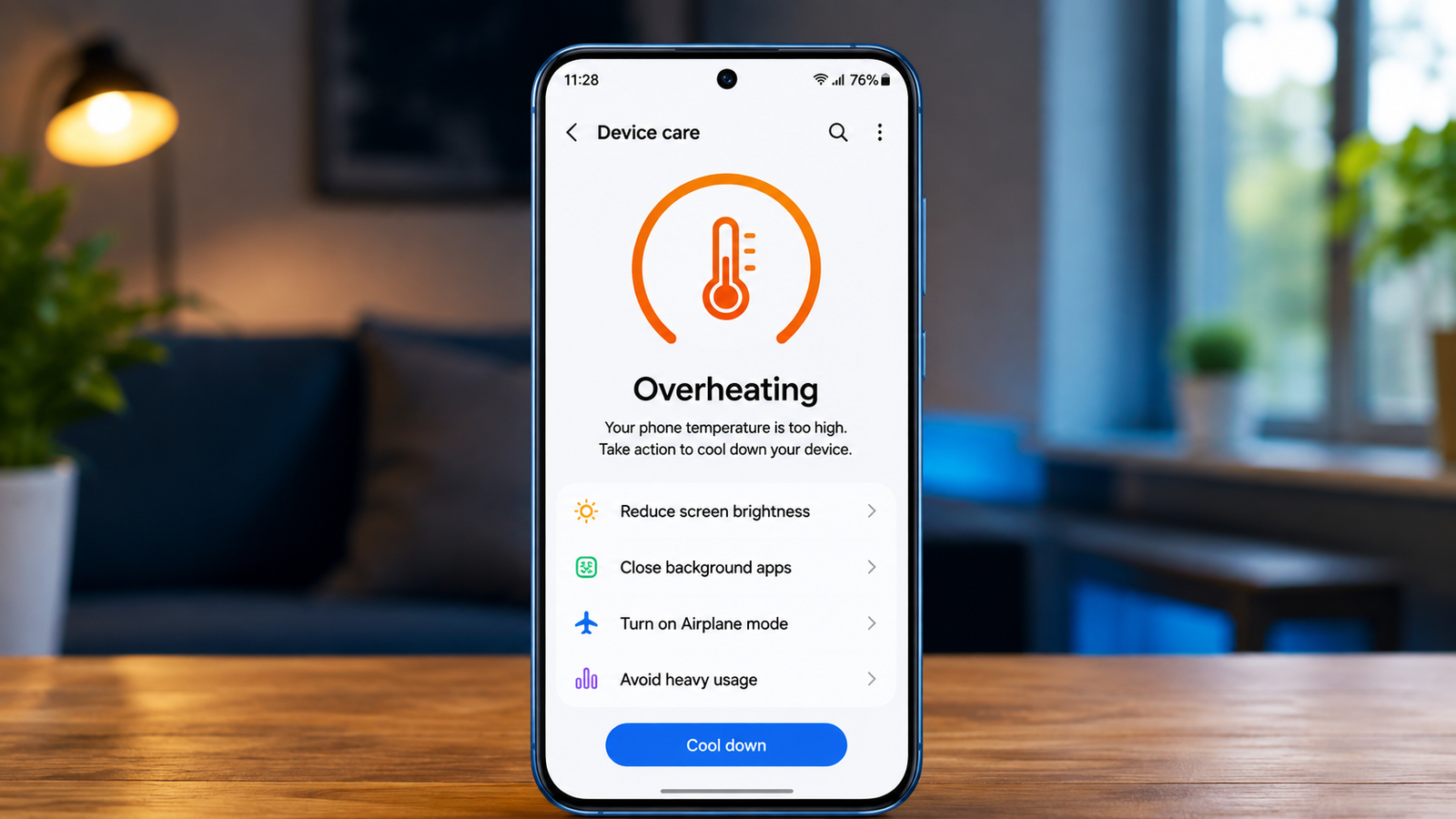
It’s normal for a smartphone to become slightly warm while charging, playing demanding games, using the camera, or running several apps at once. The problem starts when the device gets unusually hot or overheats regularly during normal use.
Excessive heat can affect battery performance, slow down the phone, and potentially cause hardware problems if the issue continues for a long time. Fortunately, you can often reduce overheating by changing a few everyday habits.
Also read: How to Fix Microsoft.directx.directinput.dll Error on Windows
Why Does Your Phone Get Hot?
Your phone generates heat whenever its processor, battery, display, or other components are working harder than usual. Some activities naturally create more heat than others.
Common examples include:
- Playing graphics-intensive games
- Recording high-resolution videos
- Using GPS for extended periods
- Running multiple demanding apps
- Fast or wireless charging
- Using the phone under direct sunlight
- Keeping several services active in the background
Using the camera for long periods, particularly at higher resolutions, can also increase the workload on the phone. If you don’t need 4K recording, switching to a lower resolution such as 1080p may reduce the amount of processing required.
Avoid Heavy Usage While Charging
Charging already produces some heat, especially with fast-charging technology. Using demanding apps or playing games while the phone is connected to the charger can add even more heat.
If your device becomes noticeably hot while charging, stop intensive activities and allow it to charge without heavy use.
Wireless charging can also produce more heat than wired charging on some devices. If temperature is a concern, using the manufacturer’s recommended wired charger may help.
It is also a good habit to disconnect the charger once charging is complete rather than keeping the phone connected unnecessarily for long periods.
Reduce Unnecessary Background Activity
Apps and services running in the background can consume processing power and battery even when you’re not actively using them.
Check which apps are using significant battery or background activity and restrict unnecessary ones where your phone’s settings allow it.
You can also try:
- Closing demanding apps when you’re finished with them.
- Restarting the phone if it becomes unusually warm.
- Disabling unnecessary background activity.
- Turning off features you aren’t currently using.
You don’t need to constantly close every app on your phone, but limiting unnecessary activity can help when a particular app is consuming excessive resources.
Lower the Phone’s Workload
When a phone is under heavy load, reducing some settings can help it cool down.
For example, you can:
- Reduce screen brightness.
- Enable Battery Saver or a similar power-saving mode.
- Lower the graphics settings in demanding games.
- Reduce video recording quality when high resolution isn’t necessary.
- Turn off GPS, Bluetooth, or other connections when they’re not needed.
These changes can reduce power consumption and may help control temperature during intensive use.
Move the Phone Away From Heat
Your surroundings can have a major effect on your phone’s temperature.
Avoid using or leaving the device:
- In direct sunlight
- Inside a parked car
- Near heaters or other heat sources
- Under blankets or pillows while charging
- In places where heat cannot escape easily
If you use a thick protective case, removing it temporarily when the phone becomes hot may also help heat escape more easily.
Don’t Put an Overheated Phone in the Refrigerator
It may seem like a quick solution, but placing a hot smartphone inside a refrigerator or freezer is not recommended.
Rapid temperature changes can create condensation and potentially allow moisture to form inside the device. Instead, stop using the phone, disconnect it from the charger if necessary, move it to a cool and dry location, and let it return to a normal temperature naturally.
Check the Battery if Overheating Happens Often
Occasional warmth isn’t necessarily a problem. However, repeated overheating during light use could indicate an issue with the battery or another internal component.
Pay attention to warning signs such as:
- The phone becoming hot during basic tasks.
- Battery life suddenly becoming much worse.
- The device shutting down unexpectedly.
- The back panel or screen beginning to lift.
- Visible swelling or physical damage.
A swollen battery is particularly important to take seriously. Stop using the device and have it inspected by a qualified technician rather than attempting to repair or replace the battery yourself.
Keep Your Software Updated
Software problems can sometimes cause apps or system processes to use more resources than necessary. Keeping your operating system and apps updated can help address bugs and compatibility issues.
It’s also worth checking your battery settings to see which apps are consuming the most power. If one application is using an unusually large amount of battery, updating or uninstalling it may help.
If the overheating began after installing a particular app, consider checking whether an updated version is available or removing the app temporarily to see whether the problem improves.
Give Your Phone a Break
If the phone becomes hot during gaming, video recording, navigation, or another demanding task, take a short break and let it cool down.
Continuing to perform intensive tasks while the device is already hot can increase the temperature further. Some phones may automatically reduce performance or display a temperature warning when they get too warm.
If you see a temperature warning, stop using the phone and follow the instructions shown on the screen.
When Should You Get Professional Help?
If your phone repeatedly overheats even when you’re performing simple tasks, there may be an underlying hardware or software problem.
Professional inspection is especially important if you notice battery swelling, physical damage, unusual smells, repeated shutdowns, or extreme heat.
Avoid opening the phone yourself unless you’re trained to work on smartphone hardware. A qualified repair professional can check the battery, charging components, temperature sensors, and other internal parts safely.
Simple Habits to Prevent Overheating
You can reduce the chances of overheating by following a few basic habits:
- Keep your phone away from direct sunlight.
- Avoid demanding games while charging.
- Use compatible and reliable chargers and cables.
- Keep the operating system and apps updated.
- Don’t cover the phone while it is charging.
- Remove unnecessary apps that consume excessive resources.
- Use Battery Saver when appropriate.
- Allow the phone to cool down after intensive use.
Final Thoughts
A warm phone isn’t always a sign of a serious problem. Gaming, charging, navigation, and video recording can naturally increase its temperature. However, frequent or excessive overheating shouldn’t be ignored.
The simplest approach is to reduce heavy usage, keep the device away from external heat, avoid using it intensively while charging, and allow it to cool naturally. If the phone continues getting extremely hot during normal use—or shows signs of battery damage—professional inspection is the safer option.